


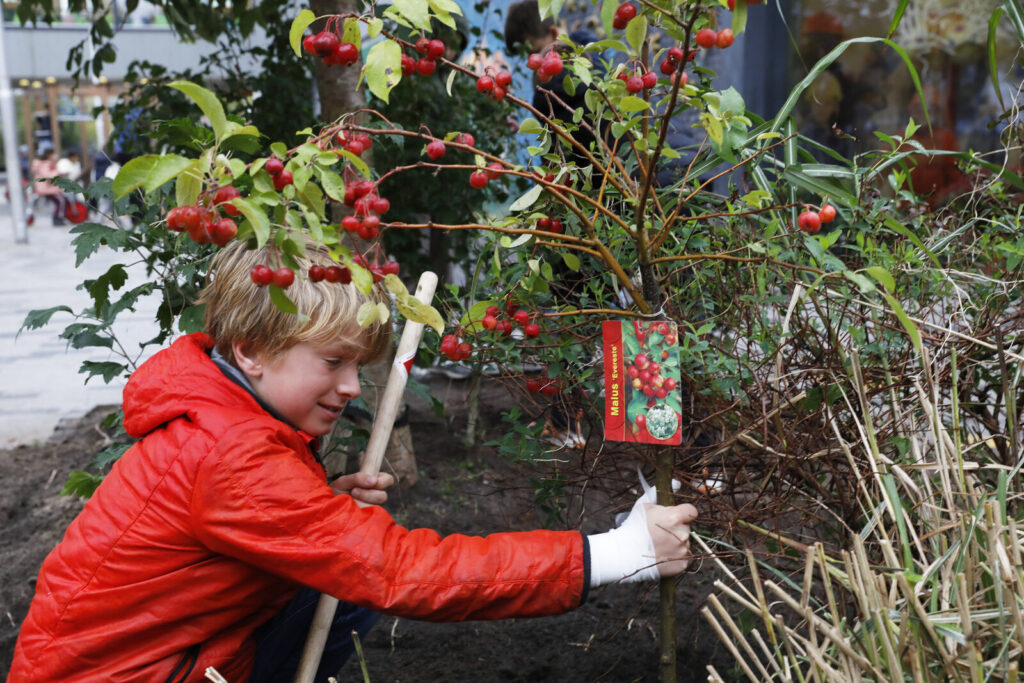
Planting took place this fall in the schoolyards of De Achtbaan and De Spits elementary schools in Utrecht. It wasn’t done by a landscaper, but by the students themselves. They used Sneeboer garden tools. These activities are part of GreenBee Outdoor, a project by the GreenBee Foundation that introduces children to plants and a green living environment.
From Tiles to a Flower Bed
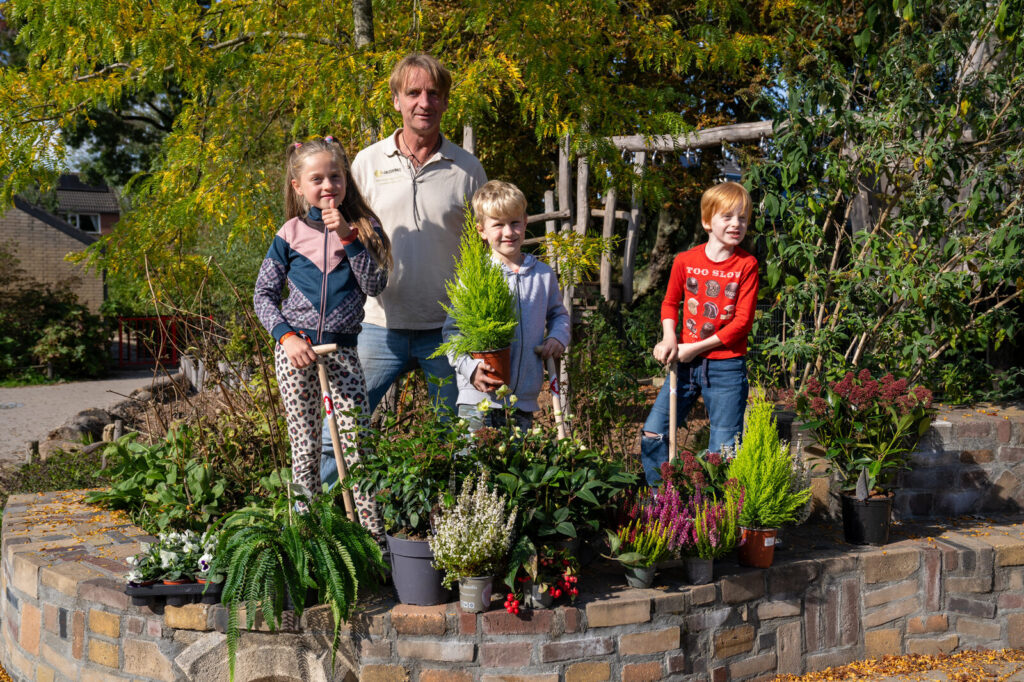
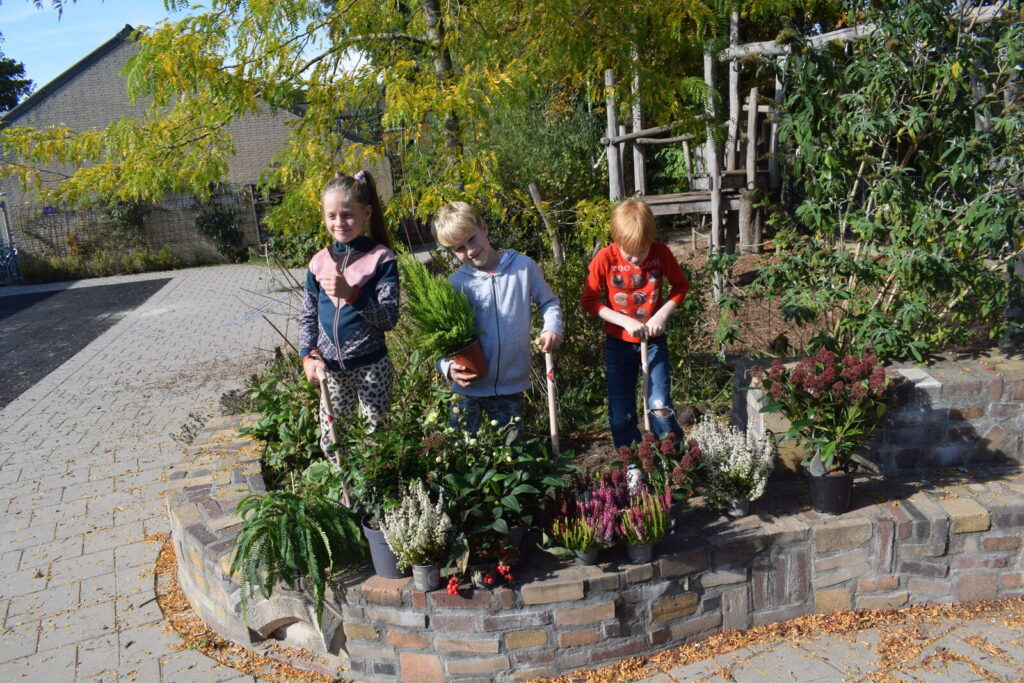
The playground at De Achtbaan is still largely paved with tiles. The school is working on plans to change that, and the fifth graders are taking the first step. Frank Timmerman of the GreenBee Foundation first taught them about garden plants. Then they got to work themselves and planted a border featuring, among other things, violets, skimmia, hellebores, heather, mountain tea, and small conifers.
They were assisted by Wilco Boender and Jan Jacobsen from VDBH West in Stolwijk, a company that specializes in landscaping and maintenance. There is a memorial tree on the square in memory of a student who passed away. That tree will remain, and new plants will be added around it.
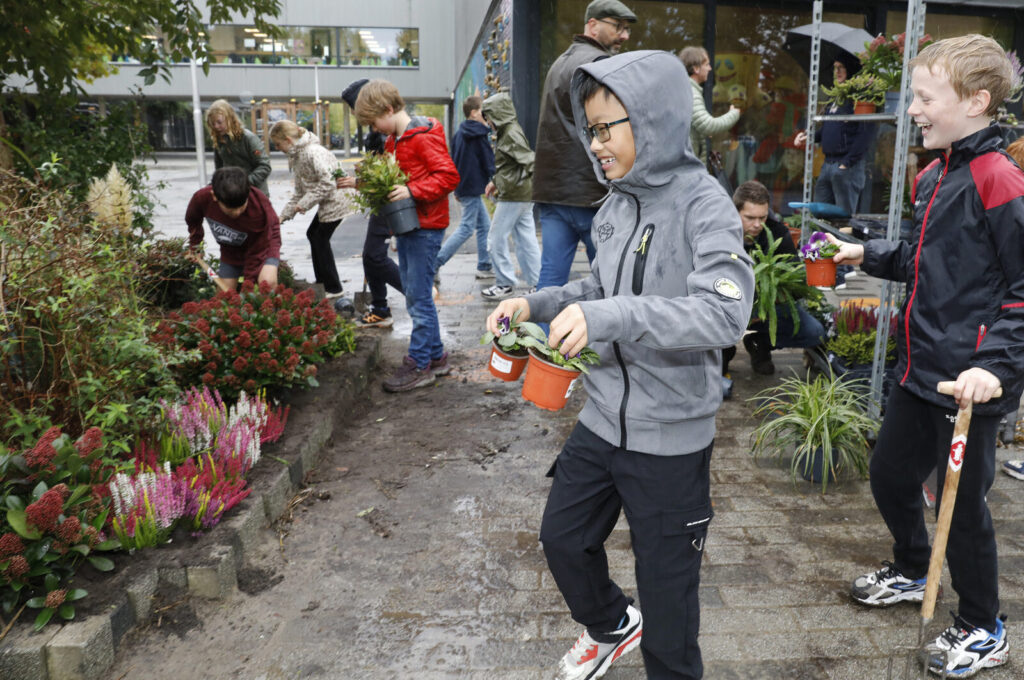
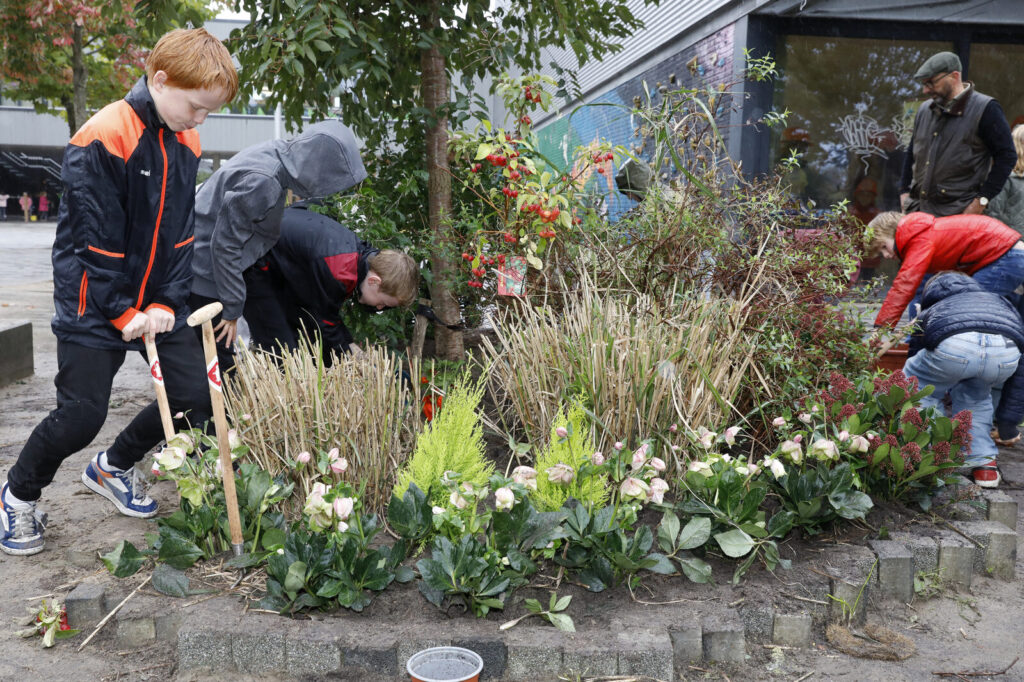
It was raining that day. The children just kept working, and the plants didn’t need any extra water afterward.
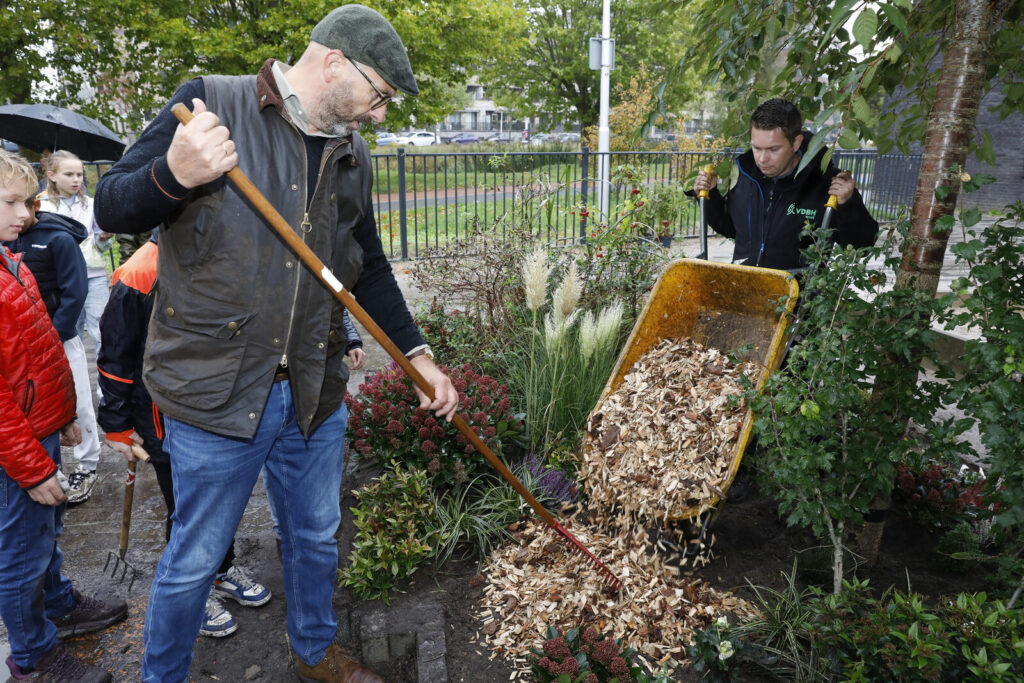
Why in the fall?
Planting is intentionally done in the fall. The soil is still relatively warm then, and there’s usually more rain than in the spring and summer. This allows plants to establish strong roots before winter and continue growing quickly in the spring. If you plant now, you’ll see the results in April. To learn more about what to do in the garden at this time of year, check out our fall gardening tips.
What Green Does for Children
Research also shows that green spaces at school matter. A 2025 study by Hasselt University and Maastricht University involving children ages 7 to 12 showed that they are able to concentrate better in a green environment. Previous research by institutions including VU University Amsterdam and the University of Groningen found that children find a green schoolyard appealing and that it can contribute to their social well-being.
Do It Yourself
What makes these activities valuable is that the children do the work themselves: digging a planting hole, loosening a root ball, and packing down the soil. You can only learn that by doing it. And for that, you need tools that fit comfortably in your hand and cut easily through the soil. With the right tools, gardening feels just the way it should.
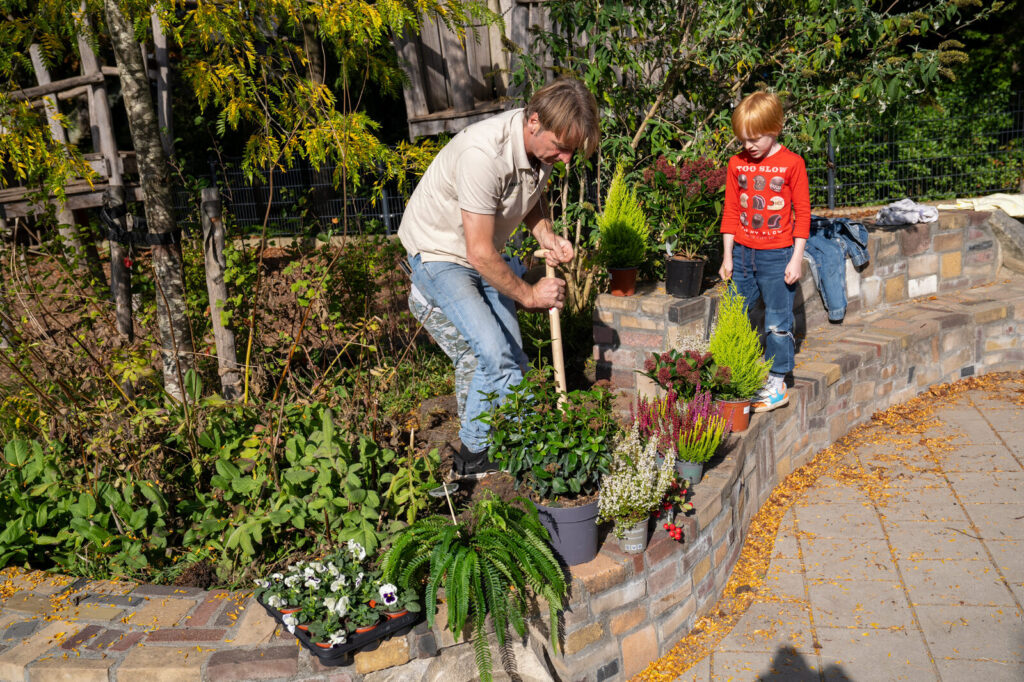
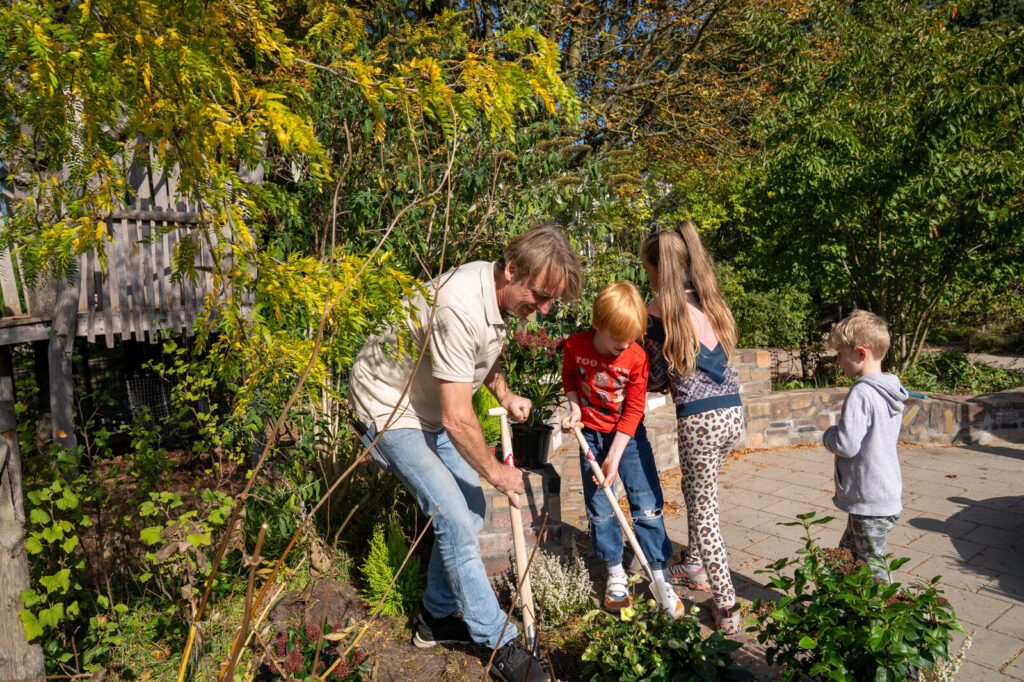
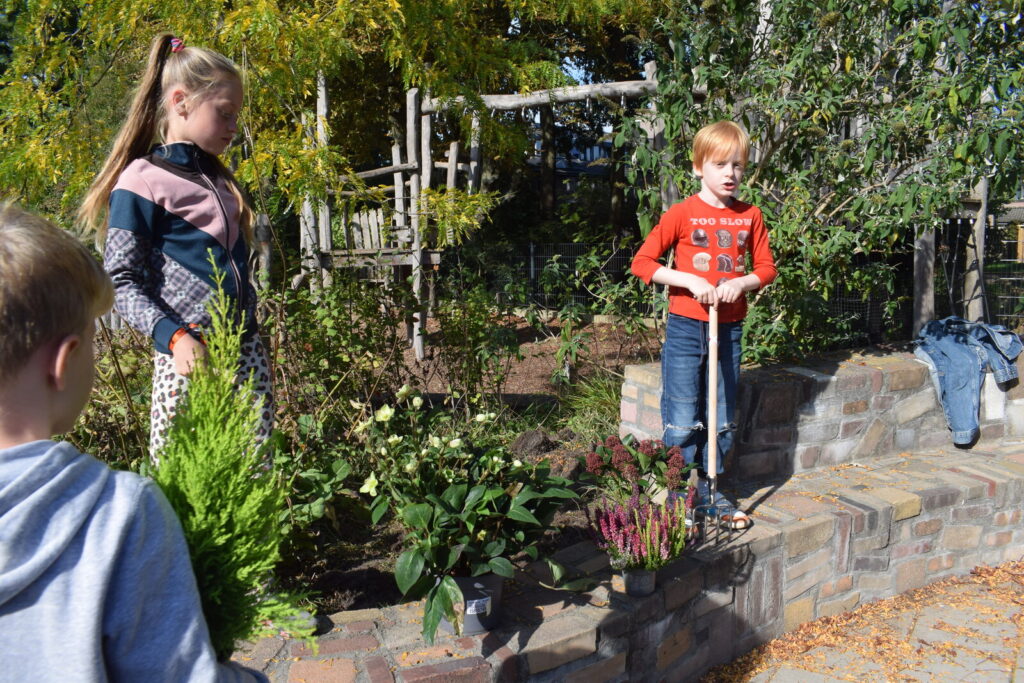
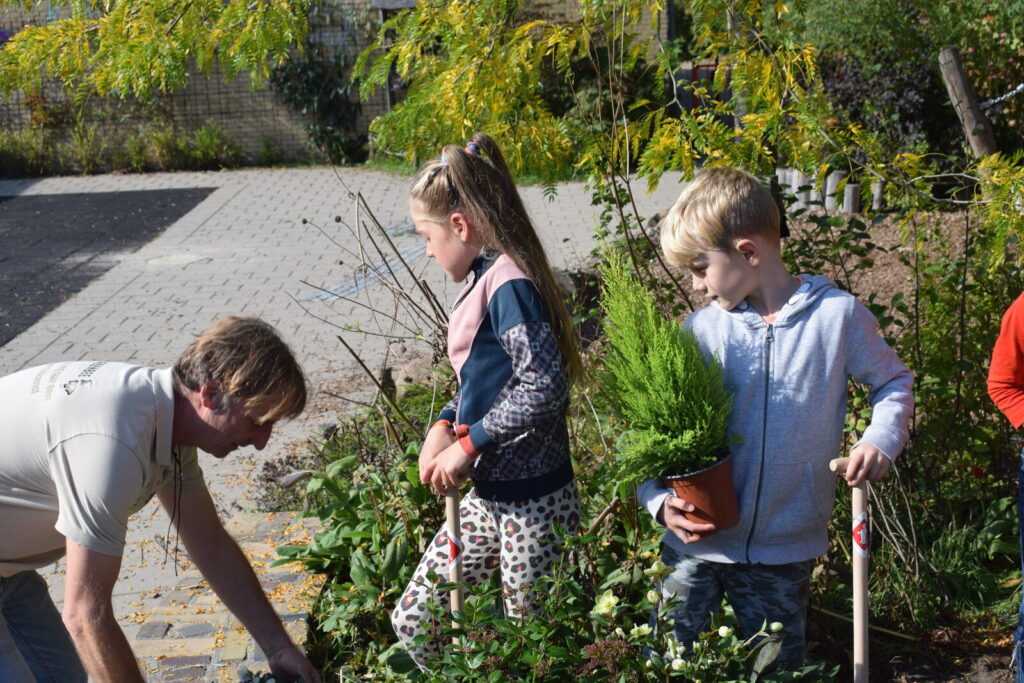
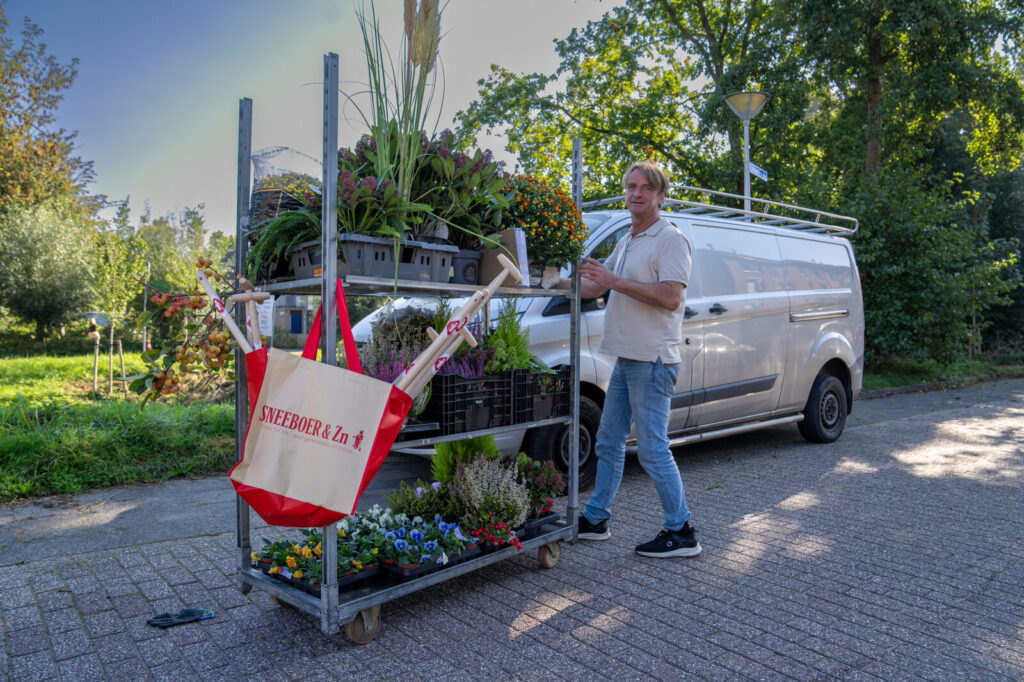
That’s why Sneeboer made the tools for these activities available. It aligns with what we value: getting more children into the garden, equipped with the right tools. A hand-forged shovel lasts for years and can be passed down. The tools a child uses to learn how to plant today can still be used in the same garden twenty years from now.
A little piece of garden of your own
The school gardens in Utrecht are part of a pilot program for a nationwide GreenBee Outdoor project. The idea is for students to adopt their own small plot of garden and take responsibility for it. In this way, they not only learn about plants and biodiversity, but also what it means to care for green spaces, throughout the seasons and year after year.
Several schools are already scheduled for this fall and next spring. In addition, each student will take home a garden plant and a booklet about fall plants so they can continue gardening at home.
Tools for life and future generations.