


Autumn is the season of falling leaves, but did you know that raking those leaves in good time is essential for the health of your garden? In this article, we explain why raking leaves isn’t just good for the appearance of your garden, but also for protecting your lawn and plants against mould and pests. We’ll also discuss how you can reuse the leaves as mulch or compost, and which Sneeboer rakes are ideal for this task. By raking in good time and using the right tools, you’ll not only keep your garden tidy, but also ensure healthy soil and a productive growing season.
Why is it important to rake leaves in good time?
Raking leaves is a job that many gardeners might put off, but this can have adverse effects on your garden. When leaves are left lying on the lawn, they soon start to clump together, especially after rain. This thick layer of leaves blocks sunlight and air circulation, preventing the grass underneath from breathing. This lack of light and air can lead to mould growth, yellow patches and, ultimately, the grass dying off.
What’s more, wet leaves provide the perfect breeding ground for fungi and diseases that can spread throughout your garden. In spring, you’ll notice that bare patches or even diseased plants have appeared, simply because the leaves weren’t cleared away in time last autumn.
Wet leaves can also be dangerous on your garden paths, as they are slippery and can cause you to slip. This makes it not just a matter of garden maintenance, but also of safety.
As well as causing damage to your lawn and posing a safety risk, fallen leaves also provide an excellent hiding place for all sorts of pests, such as snails, insects and rodents. These pests can overwinter in the thick layer of leaves and cause considerable trouble in your garden come spring. By raking up the leaves in good time, you can prevent these unwelcome guests from taking up residence in your garden.
What can you do with fallen leaves?
Leaves that you’ve raked up from your lawn aren’t rubbish. On the contrary, they’re a valuable source of nutrients for your garden. There are two excellent ways to reuse fallen leaves: as compost or as mulch.
Composting leaves
Leaves are rich in carbon, an essential component of a well-balanced compost heap. By mixing the leaves with nitrogen-rich material such as grass clippings or kitchen waste, you can create compost that you can later use to improve the soil in your garden. Compost improves soil structure and enhances moisture retention. It also promotes the growth of healthy plants by gradually releasing nutrients.
Composting leaves requires patience, as it can take anywhere from a few months to a year for the leaves to break down completely. This process can be speeded up by chopping the leaves up first, for example by running a lawnmower over them. This helps the material decompose more quickly, meaning you can use the compost sooner.
Using leaves as mulch
Another way to make use of fallen leaves is to use them as mulch. Mulch is a protective layer of organic material that you spread over the soil. It helps to keep the soil moist, reduces weed growth and protects plant roots from extreme temperatures, both in summer and winter.
The great thing about using leaves as mulch is that, over time, they slowly break down and release their nutrients into the soil. This creates fertile soil that encourages plant growth. By spreading a thin layer of raked leaves around trees, shrubs and in borders, you can make the most of this natural resource.
Rake up the leaves in good time
The timing of raking leaves is crucial. Although it may be tempting to wait until all the leaves have fallen from the trees, it is better to rake small amounts of leaves regularly, rather than waiting until the lawn is completely covered. This prevents the grass from being smothered or mould from forming due to a build-up of wet leaves. So start raking as soon as the first leaves begin to fall, and repeat this process several times throughout the season.
Which Sneeboer leaf rakes will help you with raking leaves?
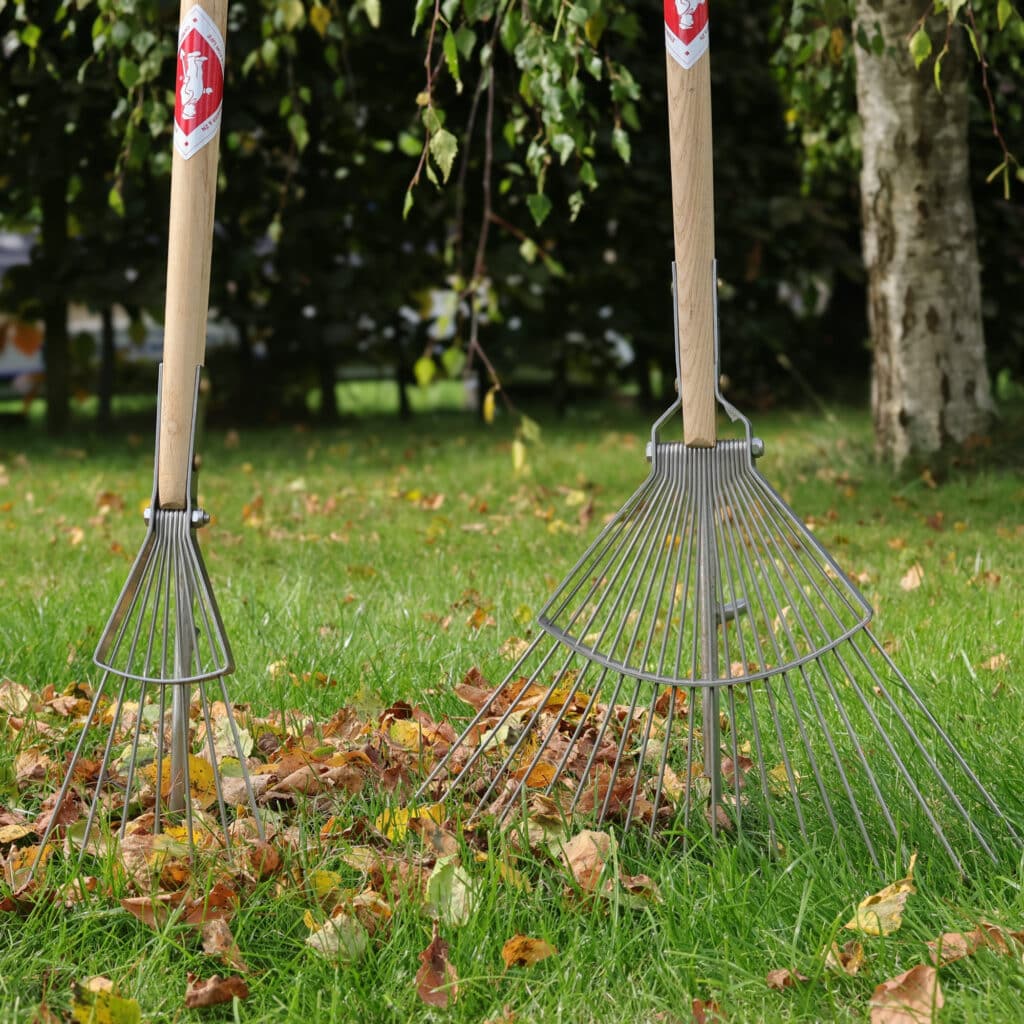
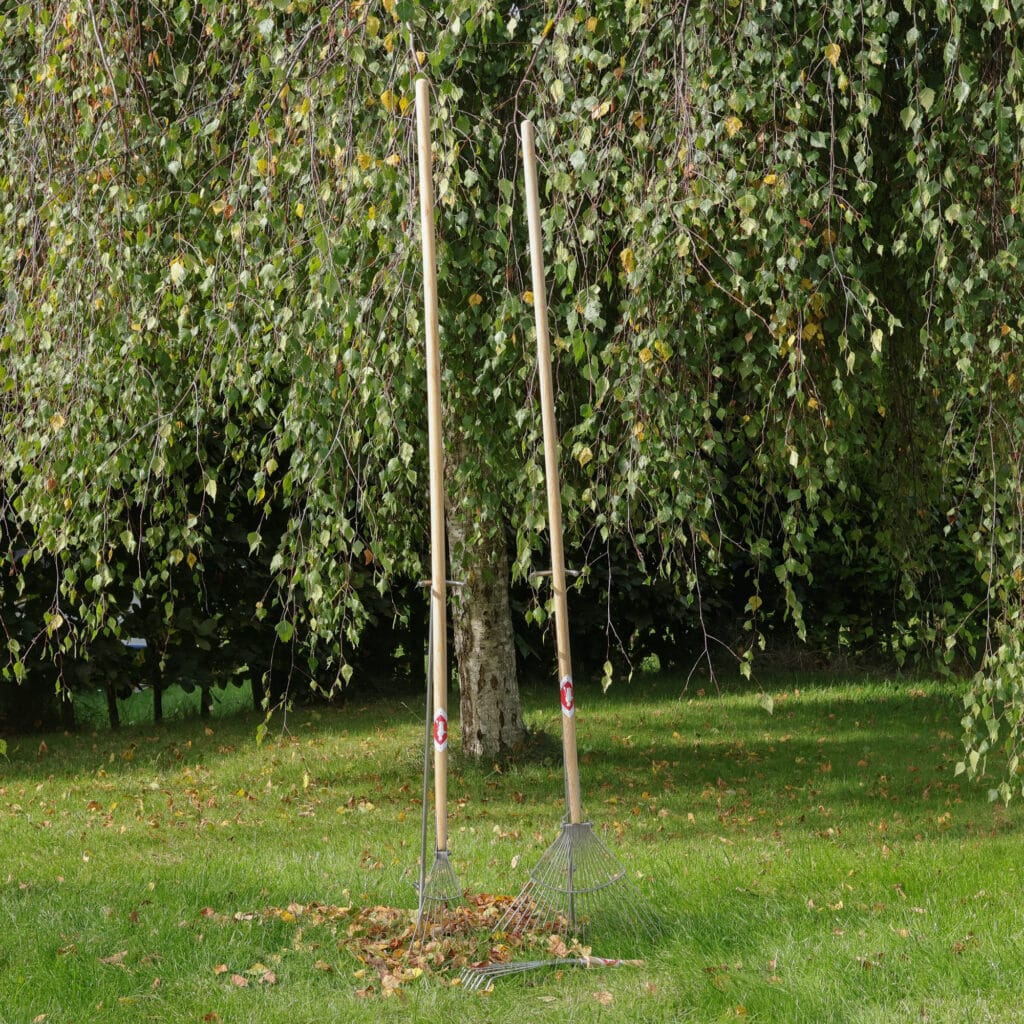
Sneeboer offers a range of high-quality leaf rakes that have been specially designed to make raking leaves as efficient and easy as possible. Each of these rakes has its own unique advantages, depending on the size and requirements of your garden.
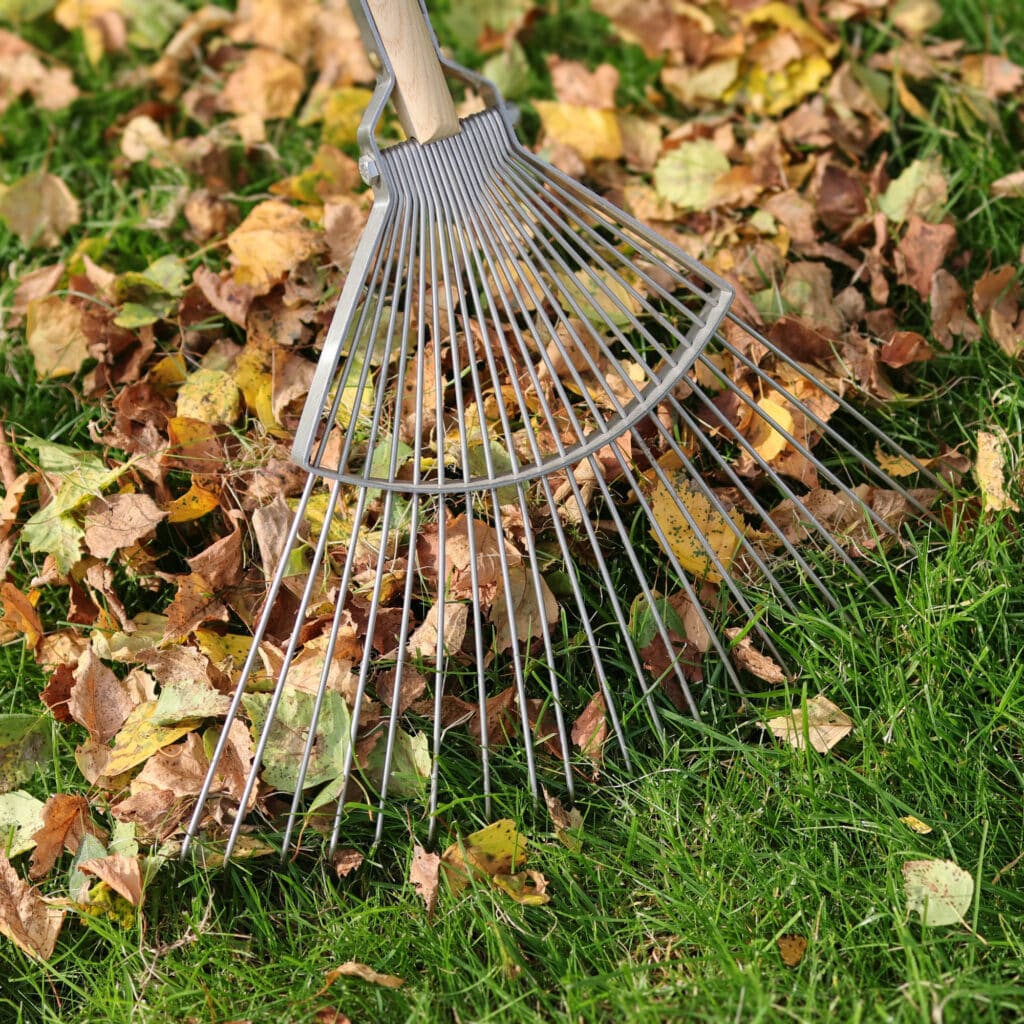
1. Leaf rake with 20 tines and a long handle
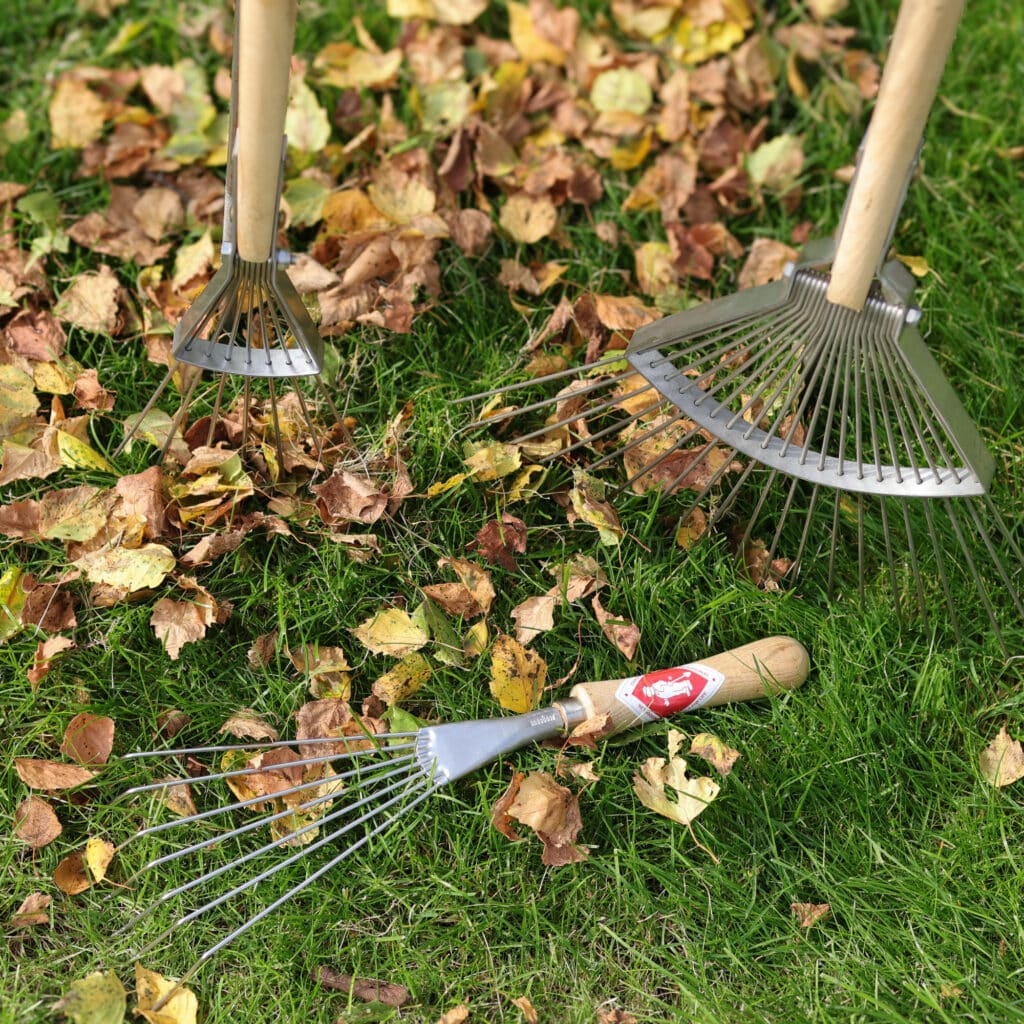
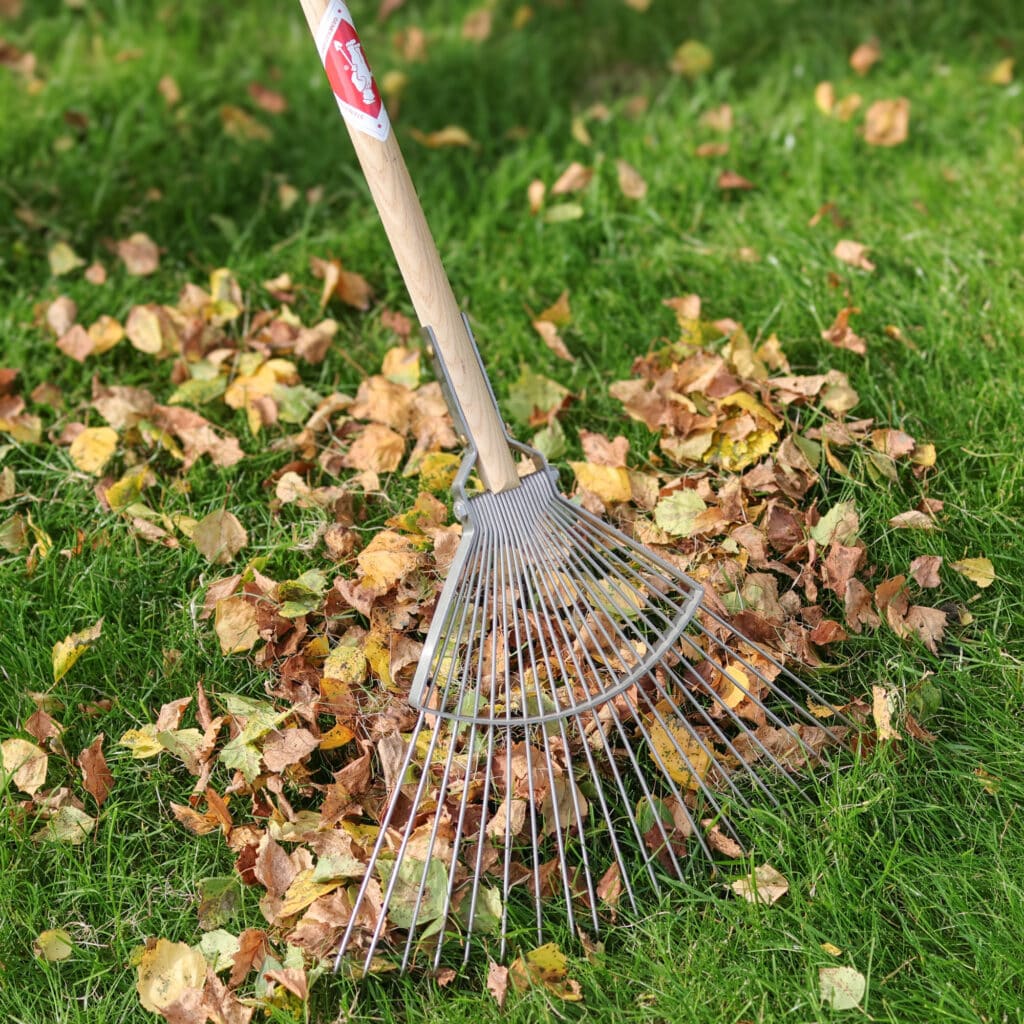
This leaf rake is perfect for raking large areas, such as lawns. The 20 flexible tines adapt to the surface, allowing you to collect large quantities of leaves without damaging the grass. The long handle ensures a comfortable working posture, so you can rake for long periods without any strain.
2. Leaf rake with 7 tines and a long handle
Do you have smaller areas to tend to, or do you work in borders? If so, the 7-tine leaf rake is an excellent choice. This rake is designed for greater precision and flexibility. The smaller head allows you to work more accurately and collect leaves without damaging the plants. Ideal for raking leaves between shrubs or around flowers.
3. Hand rake with 7 tines
For more delicate work in smaller, hard-to-reach corners, there’s the 7-tine hand leaf rake. This compact rake is ideal for raking leaves from flowerbeds or amongst delicate plants. With its short handle and narrow tines, this rake offers maximum control and precision, allowing you to rake efficiently even in hard-to-reach places.
Raking up leaves in good time is essential for maintaining a healthy garden. By removing leaves before they can cause damage to your lawn or plants, you can prevent problems such as mould, pests and the grass being smothered. You don’t need to throw the fallen leaves away, as they are a valuable source of compost and mulch, giving your garden a healthy start in the spring.
With the right leaf rake from Sneeboer, the job isn’t just easier, it’s also more effective. Whether you have a large lawn or small flowerbeds, Sneeboer has a leaf rake that’s perfectly suited to your needs. So don’t wait too long – start raking leaves in good time to keep your garden in top condition.