


About a 1950s find, a gold medal at Chelsea and a tool that respects the ground.
There are tools that you buy, use and replace after a few seasons. And there are tools you find – in a shed, in an estate, in the hands of someone who knows what good quality is. The story of the Thornett Trowel begins with the second kind. With a shovel that nobody had ordered, nobody had designed for the market, and yet it did exactly what it was supposed to do. For more than sixty years.
A barn in 2023
In 2023, Sid Hill cleared out his grandmother Janet Elizabeth Thornett’s barn. She had died shortly before. Among the tools his grandfather had once made himself – sometime in the 1950s or 1960s, in the garage, without instructions or blueprints – was a shovel. Crooked in blade, all steel, and still in perfect condition after decades of intensive use. No rust. No deformation. No loose handle.
For most people, that would have been a special memory. Something to keep, but not necessarily to use. For Sid Hill, it was different. Hill is an ecological garden designer – someone who understands his work from the soil up. He knows what mycorrhizal networks are, why soil structure is vulnerable, and what happens when you go through soil too roughly with the wrong tools. He picked up the shovel, looked at the blade, and saw it immediately.
The curved shape of the blade did something that conventional tools rarely do: it cut a clean, round, cylindrical planting hole – without turning, lifting or compressing the surrounding soil. Just in, straight down, and done. The soil around the hole remained untouched. The fungal threads intact. The structure preserved.
Hill took the shovel with him to work. And started gardening with it daily.
Chelsea Flower Show 2024: gold for the ground
The RHS Chelsea Flower Show is the world’s most prestigious horticultural exhibition. Every year, the best garden designers of the moment present their work there – with gardens that must be both skilled and visionary. In 2024, Sid Hill was one of them.
His entry was called the Microbiome Garden. A garden that celebrated life underground: the fungi, bacteria and micro-organisms that make plants grow, store carbon and sustain ecosystems. Not the flower or tree as the protagonist, but what lies beneath. The invisible infrastructure of every healthy piece of soil.
To build that garden, Hill used his grandmother’s shovel. As a conscious choice, not a sentiment. The tool suited the garden’s philosophy: minimal disturbance, maximum respect for what is already there.
The Microbiome Garden won gold. And Hill received the Prince of Wales Trophy for Sustainable Horticulture – the highest award for sustainable gardening given by the RHS. The shovel from Janet’s shed had proved professional value at the highest level gardening knows.
When we heard about this story, we knew what we wanted to do.
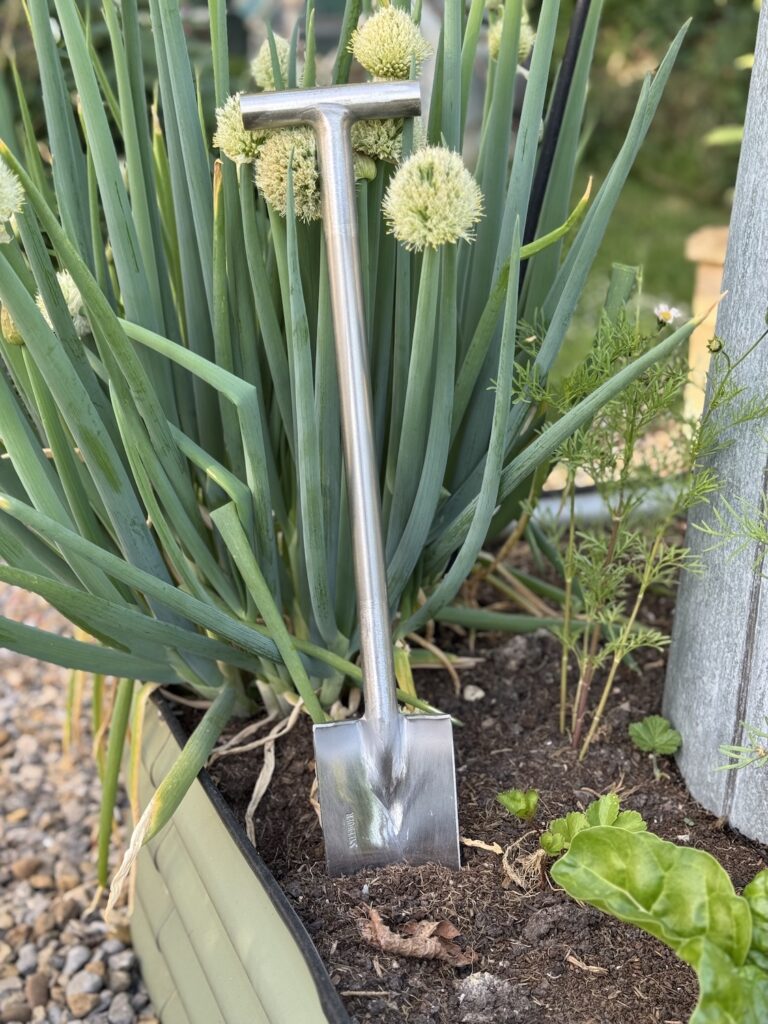
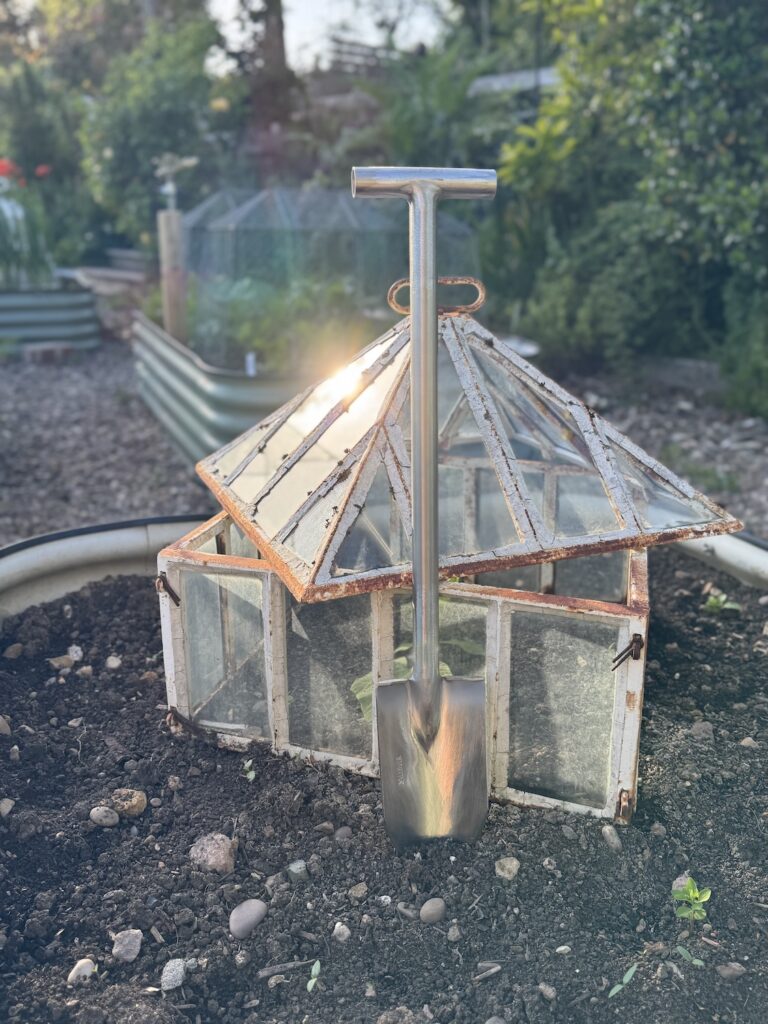
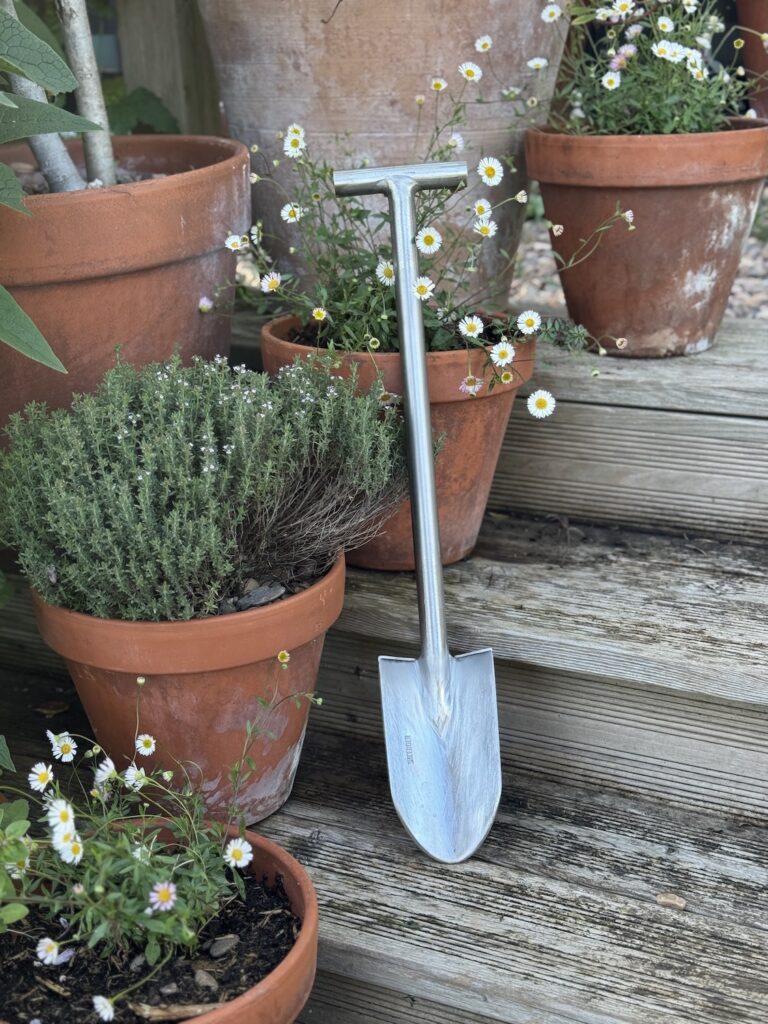
From barn to forge
Together with Sid Hill, we set to work developing a new tool – based on the design of his grandfather’s shovel, but made with Sneeboer’s materials and techniques. Full stainless steel. Induction hardening of the blade. And laser welding, from start to finish.
The latter requires some explanation, as it sets us apart from most industry providers. Laser welding is an exceptional process for many manufacturers – reserved for special projects or high-value series. For Sneeboer, it is the standard, integrated into full production. The advantages are considerable: it uses 60 to 70 per cent less energy than conventional welding, works two to 10 times faster, and leaves a heat zone that is up to two hundred times smaller. The latter is important for the precision of the final product – less heat means less distortion, less rework, a cleaner weld.
We deliberately leave the weld seam visible. Not as a compromise or limitation, but as a choice. It is proof of how the tool is made – transparency as part of the craftsmanship. Anyone holding a Thornett Trowel in their hands can see exactly how blade and handle are joined. No coating that hides anything. No finish that obscures the construction.
Seven iterations for one weld
But before we got here, there was work to do. The first prototypes of the Thornett were difficult for our craftsmen to make – especially the transition between the handle and the blade. At Sneeboer, that transition always has a clean, polished finish. That’s not a decorative choice; it’s about ergonomics, about how the tool sits in the hand, about whether you’re still comfortable working after an hour of gardening. Getting that transition correct with the specific profile of the Thornett blade proved to be a technical challenge that we had initially underestimated.
We had taken 20 prototypes to Chelsea 2025. They were sold on the first day. The market interest was undeniable. But production was not yet ready.
At that point, we could have made two choices: lower the quality standard to deliver faster, or put more pressure on our employees to meet the volume. We chose neither. We went back to the drawing board. Seven iterations, spread over several months. Each round: adjust, test, review. Until the weld was comfortable for our craftsmen to make, without any concession to the end result.
The market had to wait. That was the right decision – and one that suits who we are. Sneeboer doesn’t make tools for a season. We make tools for generations. That promise starts with how we produce, not how we sell.
What the Thornett Trowel does for shovel and soil health
The curved blade is the heart of the Thornett Trowel – and the difference is in the details. Conventional scoops are flat or slightly curved, designed for scooping and lifting. That works fine for many tasks. But in planting, that movement has a side effect: it compacts the soil around the planting hole, cuts up fungal threads and disrupts aggregates – the small, porous lumps that keep the soil structure healthy and retain water.
The Thornett Trowel enables a different movement. The curved blade cuts a clean, cylindrical planting hole – vertically, without prying or twisting. The soil around the hole remains completely intact. Mycorrhizal networks – the underground connections between plant roots that exchange nutrients, store carbon and make plants more resilient – are not interrupted. What you plant goes into the soil without disturbing the soil next to it.
For those who garden according to no-dig principles, this is not an afterthought. It is why you choose this tool over another. For those who consciously work on soil restoration – turn over less, build up more – the same applies. The Thornett Trowel is not just a shovel that lasts. It is a shovel that works with the soil rather than against it.
The technical specifications: 55 centimetres long, 700 grams, all stainless steel. In the hand, it feels as Sneeboer tools should feel: balanced, precise, present without standing out. It doesn’t require strength; it requires attention.
Named after Janet
Every tool needs a name. We had no doubt which name this should be.
Not the name of a designer, not that of an award, not that of a concept. The name of the woman whose husband made a scoop that lasted her a lifetime – and which, after her death, came to us via her grandson. Janet Elizabeth Thornett. The Thornett Trowel.
Every Thornett Trowel comes with a 50-year warranty on the steel. But our true expectation extends beyond that. Completely stainless steel, no coatings, no composite parts, no screws or rivets that loosen over time. If anything ever goes wrong – and with this tool we don’t expect it to – it can be repaired. By a craftsman, by welding, by re-sharpening. Not thrown away.
Janet’s husband’s shovel was still doing it after 60 years. That’s not a marketing story. That is evidence of what is possible when you make tools with real attention to the end result – not to the price, not to the delivery time, but to what will still be in the user’s garden in twenty, thirty, forty years’ time.
We are proud of these tools. Of the story behind it, of the artisans who make it, and of the collaboration with Sid Hill that made it possible. The Thornett Trowel is not a limited edition, a tribute that disappears after an edition. It is a permanent part of our range – made to last, just like the scoop that inspired it.
Made for those who take the ground seriously – and for those after.